He Is Not the Shadow of a Football Legend: He Is the Son Completing His Father's World Cup Dream
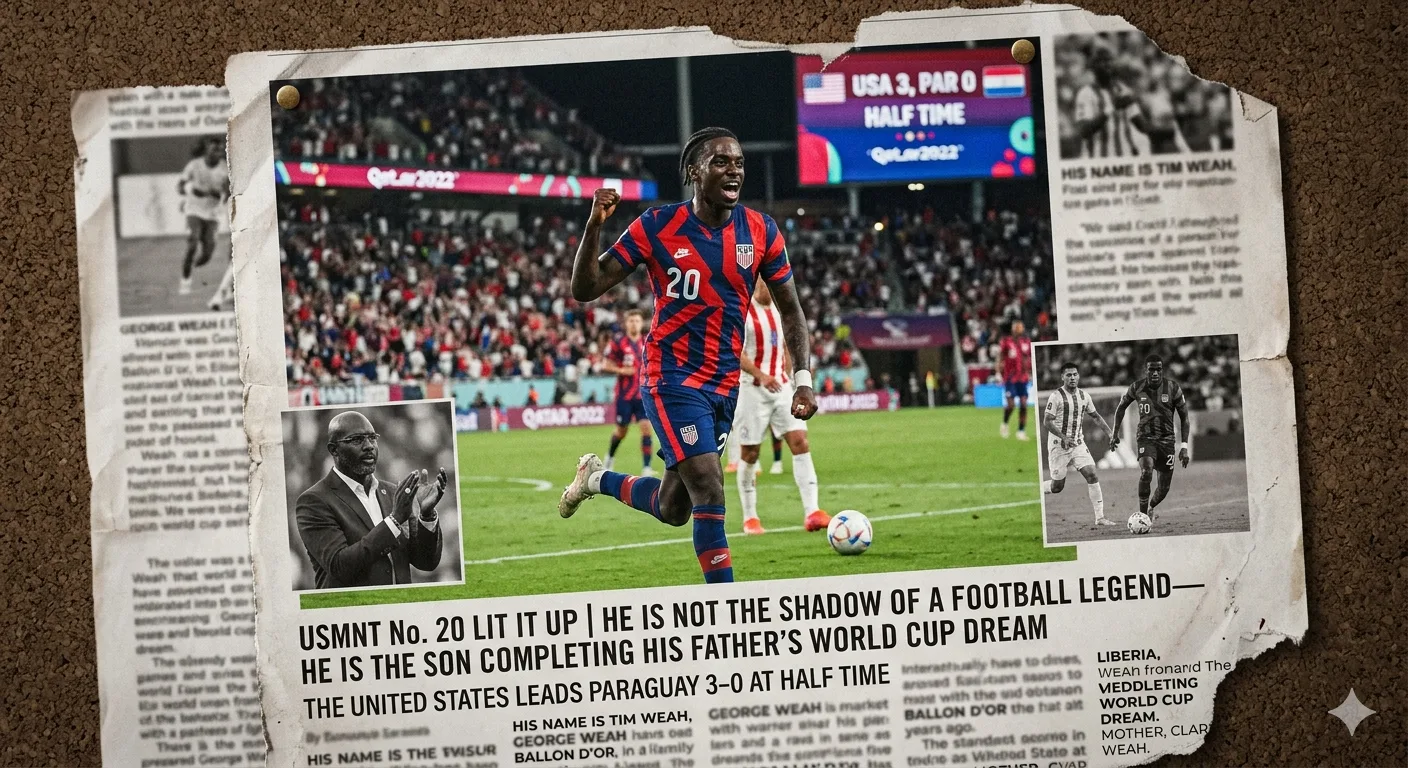
The United States leads Paraguay 3-0 at half time.
But tonight, what many people will remember is more than the score.
They will remember another story behind the United States' No. 21.
His name is Tim Weah.
He came on in the 72nd minute, carrying the United States' No. 21 into the match.
And if that surname sounds familiar, you are right.
His father is George Weah, one of the greatest African footballers in history.
Just how great was George Weah?
He won the Ballon d'Or in 1995.
He was named FIFA World Player of the Year.
He became a legend of Liberian football.
Later, he served as president of Liberia from 2018 to 2024.
It is a life story that almost feels like a film.
Yet for all his greatness, there was one regret in his career.
He never played in a World Cup.
That had nothing to do with a lack of ability.
Football can simply be that cruel.
However great one player may be, he still may not be able to carry an entire national team to the World Cup.
In 2002, Liberia came extremely close.
George Weah almost brought his country to the door of the tournament.
In the end, they still fell one step short.
That single step became a regret the Weah family carried for years.
So tonight, when Tim Weah walked onto a World Cup pitch wearing the United States' No. 21 shirt, the moment carried a different kind of weight.
He is more than an ordinary second-generation star.
Behind him stands a father who won the Ballon d'Or, yet never reached the World Cup.
Many children inherit wealth.
Some inherit fame.
Tim Weah inherited a World Cup dream his father was never able to complete.
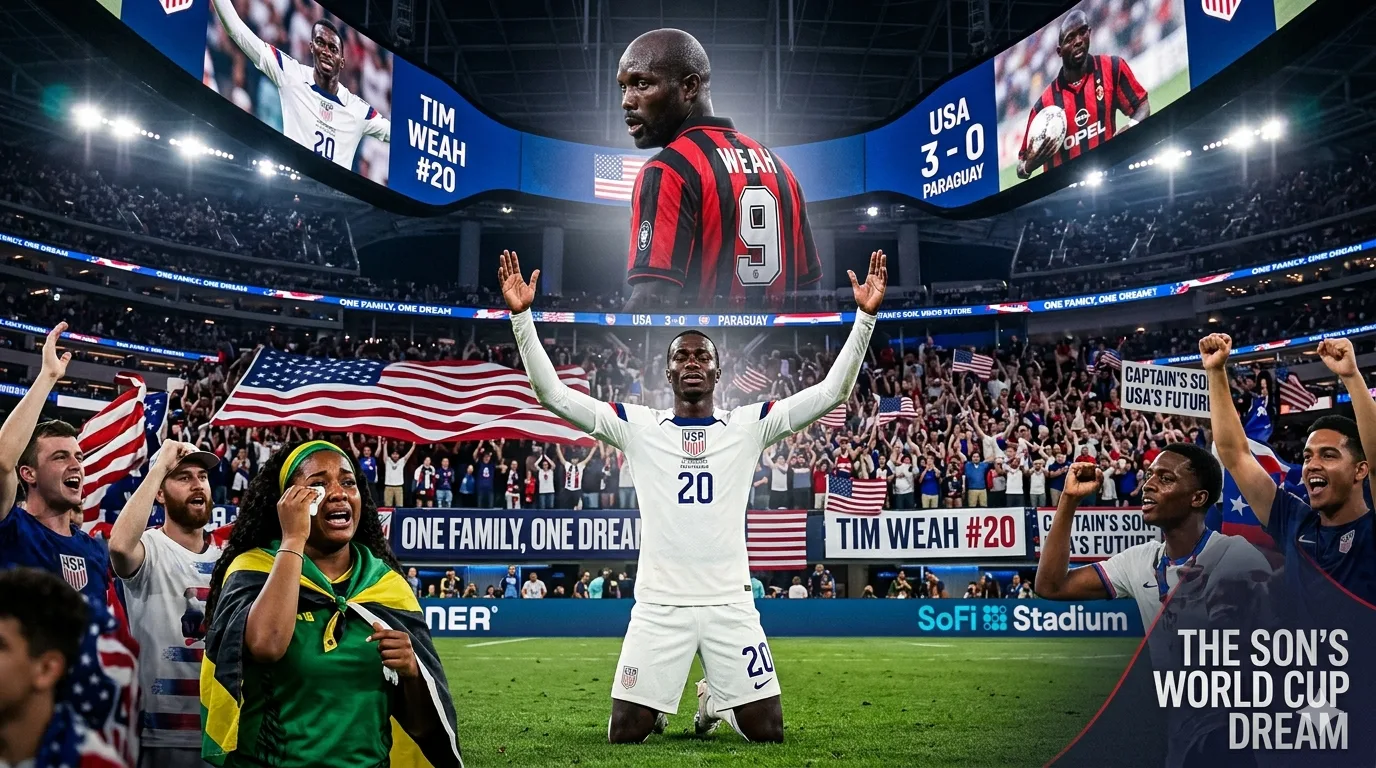
What makes Tim Weah's story even more moving is that his football journey belongs to more than his father.
Everyone knows George Weah is a legend.
But Tim has said that the person who truly brought him into football was his mother, Clar Weah.
She was his first coach.
She drove him to training.
She accompanied him to matches.
During all those years when nobody was watching, she guided her son, step by step, into the world of football.
His father gave him an enormous surname.
His mother gave him the earliest years of sacrifice, support, and companionship.
That is why Tim Weah's story can never be reduced to a single phrase: "the son of a football legend."
Because the name "Weah" carries both honor and pressure.
Every time Tim steps onto the pitch, many people think of his father first.
Every time he makes a mistake, people ask:
Is he worthy of that name?
But tonight, the United States' No. 21 was nobody's shadow.
He brought pace and energy on the wing.
In his minutes on the pitch, he offered width and direct running.
He is no longer standing behind his father's legend.
He is writing the Weah name into World Cup history in his own way.
That is also what makes the United States team so distinctive.
Tim Weah was born in New York.
His father is from Liberia.
His mother has Jamaican roots.
He carries Africa, the Caribbean, and the United States within him, along with a football dream his family held onto for decades.
So when he wears the United States shirt, it represents more than a choice of nationality.
It is the story of an immigrant family being seen on the World Cup stage.
Tonight, many people will say:
"The United States' No. 21 carried a remarkable family story onto the pitch."
But once you know his story, you understand that he produced more than a few dribbles, attacks, or memorable moments.
He played on the World Cup stage his father could never reach.
He played on the stage built by years of his mother driving him to training and standing beside him.
And he showed the moment when a son finally stepped beyond the shadow of a legend and began to become himself.
George Weah never played in a World Cup.
But his son is here.
And for those who knew the story, the United States' No. 21 meant more than a late substitute.
He is not the shadow of a football legend.
He is Tim Weah.