The Ability Triangle: Football Intelligence, Composure, and Professionalism
At a home World Cup, who's under the greatest stress?
Not the coach, nor the goalkeeper.
Christian Pulisic.
He helped create the opening own goal and then squared the ball from the left for Folarin Balogun's first goal, shaping the United States' explosive first half against Paraguay.
After taking a kick to the calf, he was withdrawn at halftime as a precaution.
A lot of people call him "Captain America."
But interestingly, Pulisic has never been particularly fond of that nickname.
Because he has never seen himself as a superhero.
He would rather see himself as a professional footballer: quiet, practical, and focused on doing his job every single day.
Because this generation of the United States Men's National Team has never been satisfied with simply getting out of the group.
They want to prove that American soccer is finally ready to rewrite its history.
And Pulisic is the face at the front of that story.
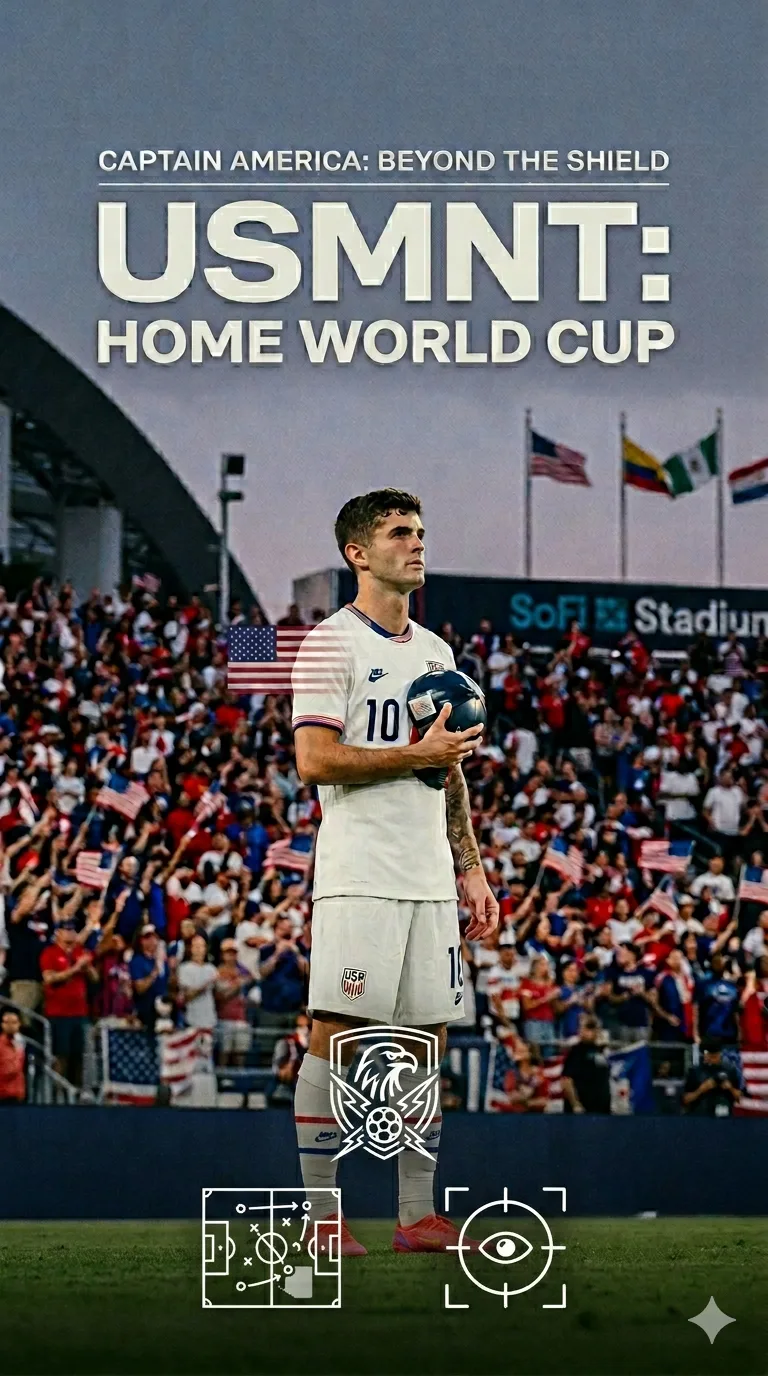
He has played at the highest level in Europe, and has competed on some of football's biggest stages.
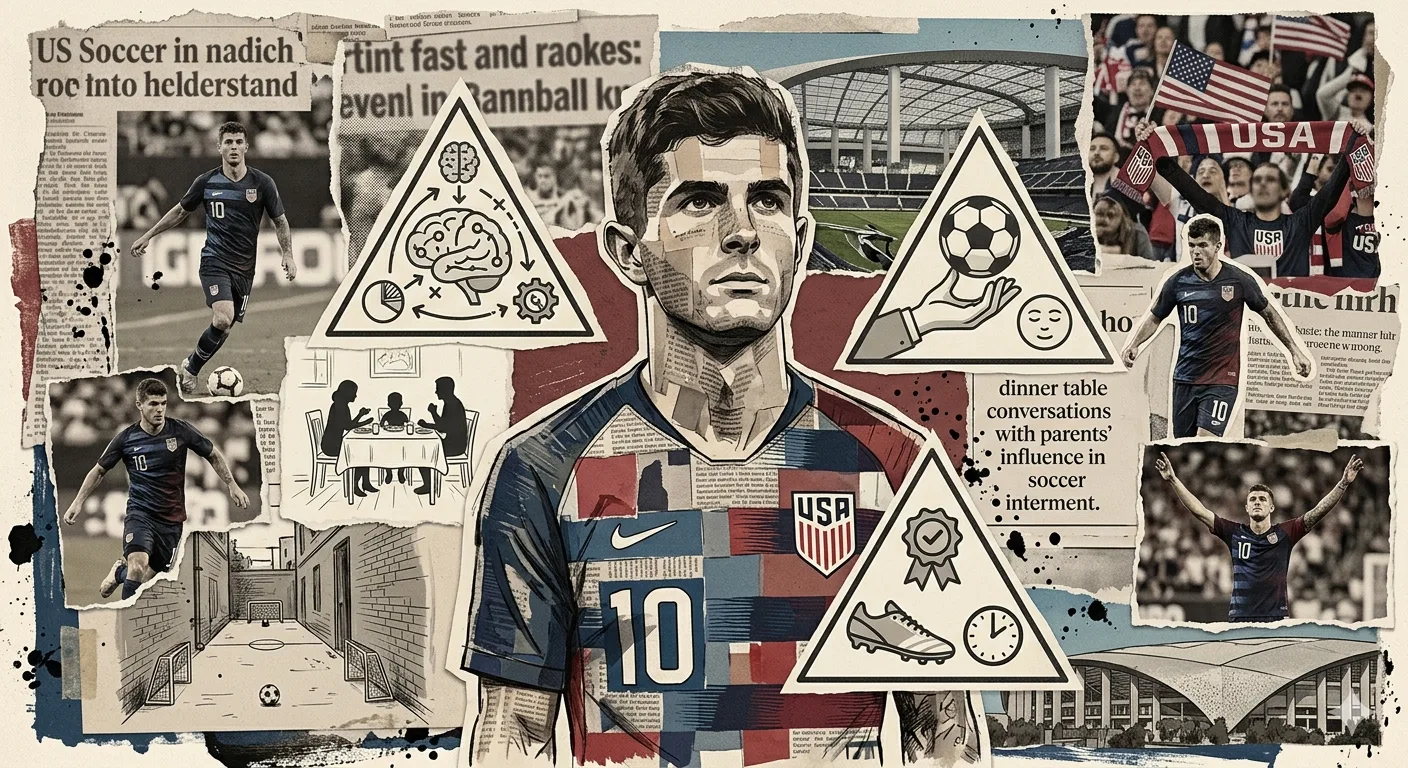
But if you think his success comes down to talent alone, you may be overlooking the most important part of his game: his ability triangle.
1, football intelligence. 2, composure. 3, professionalism.
Pulisic's greatest advantage lies beyond what he can do with the ball at his feet.
It lies in his football brain, and in his ability to make decisions under pressure.
Many young American players do not start seriously learning concepts such as spatial awareness, movement, and scanning until they are thirteen or fourteen.
Pulisic's experience was different.
Around his family's dinner table, his parents did not simply talk about winning and losing.
They discussed when to look over your shoulder, how to use third-man runs, and how a pass could break through an entire defensive line.
While other children were still learning how to play football, Pulisic was already learning how to understand it.
Pulisic's parents, Mark and Kelley, both played college soccer.
His father, Mark, also spent several years playing professional indoor soccer.
Indoor soccer is defined by tight spaces, relentless speed, and almost no time to think.
Mark brought that environment into Christian's training at home.
Small balls. Narrow channels. Miniature goals.
Every touch required him to decide immediately what came next.
When Christian made a choice, his father would rarely give him the answer straight away.
Instead, he would stop and ask:
"Did you have another option?"
Through those conversations, repeated again and again, Pulisic learned to read the game, recognize numerical advantages, and identify the best possible route forward far earlier than most players his age.
That ability eventually became one of his greatest competitive advantages.
When other players saw where the ball was, Pulisic was already anticipating where the next space would appear.
But his parents developed more than his tactical understanding.
They also prepared him psychologically for pressure.
From an early age, Pulisic was expected to take responsibility for his own performances. To take the blame, take the fall, for himself.
His parents encouraged him to analyze what had happened, reset mentally, and commit himself fully to the next match.
More importantly, they protected his sense of identity.
In their eyes, Pulisic was a person first and a footballer second.
That family environment gave him a form of psychological protection.
It kept him grounded when the applause arrived and stable when the criticism followed.
So when he faced stronger competition, periods of injury, difficult stretches of form, and public doubt, the stable values developed within his family became one of his most important weapons.
Some people have called this the "Pulisic Edge."
The tactical understanding that might take another player eight or ten years to develop, Pulisic may have developed in four or five.
And when pressure causes other players to lose clarity, he can often remain composed and choose the most effective option.
The decision that truly changed the course of his career came during his teenage years.
Using the family's Croatian heritage, his parents secured him an EU passport in advance.
That allowed him to enter Borussia Dortmund's academy and experience Europe's highest level of tactical development at a young age.
So the Pulisic we see today is far more than a player with speed and dribbling ability.
He understands space. He controls tempo. He processes the game quickly.
He is also a leader capable of maintaining concentration and producing consistently under enormous pressure.
And perhaps most impressively, despite becoming one of the most recognizable stars in American soccer, he has remained quiet, disciplined, and professional.
He has spoken about his discomfort with being portrayed as a hero.
Football has always been a team sport.
What matters to him is completing the work required of him.
Scoring, assisting, tracking back, and pressing are all parts of a professional footballer's job.
They are responsibilities, rather than performances designed to attract attention.
Whether at Borussia Dortmund, Chelsea, or AC Milan, he has rarely tried to place himself at the center of the story.
He has focused on the quality of his training, the level of his performance, and the ways he can help his team win.
That professionalism has allowed him to continue evolving across different leagues and tactical systems.
At AC Milan in particular, he has done more than rediscover his best form.
He has also revealed a side of his game that has often been overlooked.
Alongside his attacking contribution, he commits himself fully to pressing, defensive recovery runs, and tactical execution.
His defensive discipline and work rate away from the ball have consistently ranked among the strongest in the team.
That is one of the reasons coaches trust him.
Because a truly mature star contributes beyond goals.
When the team needs him, he is willing to complete all the work that rarely appears in the highlights.
Against Paraguay, Pulisic carries the expectations of American supporters.
He also carries the ambitions of an entire generation of American soccer.
Yet perhaps the most distinctive thing about him is that he has never treated himself as the team's savior.
"Captain America" represents more than a nickname.
It represents responsibility.
Football intelligence allows him to see opportunities that others miss.
Composure allows him to make clear decisions in decisive moments.
Professionalism allows him to remain at the highest level over time.
Together, those three qualities form Pulisic's most powerful ability triangle.
And they were developed over many years.
Their foundations were laid long ago, through conversations with his parents around the family dinner table.
Tonight, the United States finally steps onto its own World Cup stage.
The home crowd is ready.
And Pulisic is ready as well.
He enters that stage as a quiet, composed, and professional footballer.
A superhero identity has never been necessary.
If this United States team truly wants to write a new chapter in its history, the first step begins tonight.
Let us see whether the USMNT can produce a performance that defines this generation.
Let us see Pulisic lead the team in his own way.
Tonight, America wants more than victory.
It believes it has the ability to achieve it.
May Pulisic recover well and return healthy.
Come on, USA!